Six Taipei Biotechs Head to BIO 2026 in San Diego, With Precision Medicine, Drug Delivery, and Bioprocess Innovation in Focus
PR Newswire
SAN DIEGO, June 18, 2026
SAN DIEGO, June 18, 2026 /PRNewswire/ -- The BIO International Convention, held each June in San Diego, is where dealmaking meets discovery. As the global biotechnology sector continues shifting toward precision medicine, advanced therapeutics, and translational diagnostics, the convention floor has become less about visibility alone and more about partnership infrastructure, commercialization readiness, and cross-border integration. For a week, thousands of researchers, investors, and executives converge to compare pipelines, negotiate partnerships, and take the temperature of an industry in constant motion, as reported by GeneOnline.
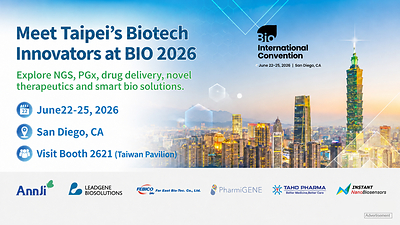
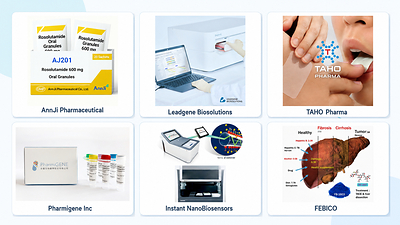
Against that backdrop, the Taipei City Government is organizing a delegation of six Taipei-based companies to BIO 2026 — positioning Taiwan's biotech ecosystem within broader conversations around drug development, companion diagnostics, biomanufacturing, and next-generation biomedical platforms. The participating companies — AnnJi Pharmaceutical, Leadgene Biosolutions, FEBICO (Far East Bio-Tec Co., Ltd.), PharmiGENE, TAHO Pharma, and Instant NanoBiosensors — span therapeutics, diagnostics, CDMO services, biosensing, and bioprocess instrumentation. Taken together, they reflect a sector that has moved well beyond contract services and into areas where Taiwan companies are generating original science.
The delegation arrives at a moment when global biotech faces mounting pressure to shorten development timelines, improve manufacturing scalability, and demonstrate clinically actionable differentiation in increasingly competitive markets. Healthcare systems worldwide are managing aging populations, chronic disease burden, and growing demand for personalized treatment — trends that continue reshaping investment and partnership priorities across the sector. For Taipei's biotechnology industry, BIO 2026 is another opportunity to meet that moment on an international stage.
The Drug Pipeline Problem — and How AnnJi Pharmaceutical Is Targeting It
One of the persistent challenges in rare and neurological diseases is the gap between scientific discovery and clinical-stage assets. Conditions like Kennedy's Disease — a progressive polyQ neurodegenerative disorder affecting motor neurons — remain largely without disease-modifying treatment options despite years of research. It is exactly this gap that AnnJi Pharmaceutical is targeting.
AnnJi's lead program, AJ201, is an androgen receptor degrader that operates through Nrf1/Nrf2/Hsf1 pathway modulation and is currently Phase 3-ready for Kennedy's Disease. The company's pipeline spans Histone Deacetylase 6 (HDAC6) inhibitors across multiple indications — including CIPN (chemotherapy-induced peripheral neuropathy), fibrotic diseases such as IPF, and keloid scarring— alongside additional pre-clinical programs. AnnJi's strategic approach focuses on novel small molecules with first-in-class potential, strategically pursuing both out-licensing and in-licensing to build a portfolio positioned for global commercialization.
AnnJi's presence at BIO reflects a broader, accelerating trend: Taiwan-based drug developers are increasingly advancing into late-stage clinical assets and anchoring their business models around international partnership rather than domestic markets alone.
Accelerating Cell Line Development and Long-Term Metabolic Research: The Dual-Platform Strategy of Leadgene Biosolutions
Upstream of the clinic, pharmaceutical and biotech workflows face a silent but critical bottleneck: the sheer time and resource investment required to scale cell lines and optimize bioprocesses. The instrumentation side of biotech rarely gets headlines, but the efficiency of these early-stage platforms shapes timelines across the entire drug development pipeline. To address these distinct challenges, Leadgene Biosolutions has deployed a dual-platform strategy, splitting its core technologies into two specialized systems engineered for both industrial bioprocess scale-up and long-term, real-time metabolic analysis, supporting applications across biomanufacturing and advanced life science research.
For high-throughput cell line development (CLD) and bioprocess optimization, the NEST series microbioreactor platform tackles traditional growth bottlenecks head-on. Operating at the 24- and 96-well plate scale, the system combines programmable micro-mixing and independent incubation control with enhanced oxygen transfer efficiency. By dramatically improving oxygen availability during parallel screening, NEST maintains strict process consistency while aggressively cutting conventional CLD timelines by 29% to 42%.
Complementing this scale-up efficiency is the DolphinQ series, built for deep-dive, long-term metabolic monitoring in academic and translational research. While traditional endpoint assays offer only isolated, static snapshots of cellular activity, DolphinQ provides sampling-free, real-time tracking of DO, pH, OCR, and ECAR across extended culture windows spanning days, weeks, or months. Together, these platforms bridge the gap between process engineering and deep biological analysis, providing a specialized toolkit spanning a range of applications spanning cell line development, bioprocess optimization, cell and gene therapy research, immunology, infectious disease studies, oncology, and metabolic research to provide researchers and bioprocess developers with technologies that support both process efficiency and long-term biological analysis.
Creating Next-Generation Pharmaceutical Products Through Advanced Delivery Technologies
TAHO Pharma, a Taiwan-based specialty pharmaceutical company, will showcase its portfolio of differentiated pharmaceutical products and drug delivery technologies at this year's conference. Through its Oral Dissolving Film (ODF) and Transdermal/Transmucosal Drug Delivery platforms, TAHO transforms established pharmaceutical compounds into innovative, patient-centric products with enhanced convenience, improved treatment adherence, and strong lifecycle management potential.
By combining proven active pharmaceutical ingredients with advanced delivery technologies, TAHO creates value-added products that offer meaningful differentiation in increasingly competitive markets. The company's growing portfolio spans multiple therapeutic areas and includes assets at various stages of development, creating opportunities for strategic partnerships and regional expansion.
TAHO is actively seeking global licensing, co-development, and regional commercialization partners interested in differentiated pharmaceutical products that address unmet patient needs while providing a clear competitive advantage.
Pharmacogenomics Moves to Routine Care via PharmiGENE's Diagnostic Kits
The clinical application of pharmacogenomics (PGx) has been building momentum for years, but implementation at scale — in real hospital workflows, for real patients — remains uneven. Adverse drug reactions, including severe cutaneous adverse reactions (SCARs) such as Stevens-Johnson Syndrome (SJS/TEN), are among the most preventable serious harms in medicine. The connection between HLA typing and drug hypersensitivity is well-established in the literature; translating that into actionable, point-of-care testing is where the field is still catching up.
PharmiGENE has built its business model around this translation by developing PGx kits and HLA typing solutions designed to identify genetic risk factors for adverse drug reactions before patients are exposed. Its work in SCARs prevention is particularly relevant in Asian populations, where specific HLA alleles linked to drug hypersensitivity occur at higher frequencies than in other demographics.
To support clinical adoption, these kits are certified for In Vitro Diagnostics (IVD) use by both Taiwan and China authorities. Furthermore, their inclusion in the National Health Insurance system in Taiwan gives local genetic diagnostics companies a scientifically grounded, commercially viable position in the region.
Precision Diagnostics in Alzheimer's and Leukemia via Instant NanoBiosensors
As healthcare systems worldwide push toward precision medicine, one challenge remains consistent: delivering accurate diagnostic insights early enough to improve patient outcomes. This need is particularly urgent in Alzheimer's disease and leukemia, where earlier detection and more informed treatment decisions can significantly influence disease progression and survival. For Alzheimer's disease, researchers are increasingly investigating protein biomarkers and post-translational modifications (PTMs) that may reveal signs of neurodegeneration before clinical symptoms emerge. In leukemia, advances in genomic profiling are enabling more precise disease classification and treatment selection, supporting the transition toward personalized medicine.
To address these challenges, Instant NanoBiosensors has developed protein and genomic testing platforms. Its biosensor technologies, FOPPR and FONLISA, are designed for highly sensitive detection of protein biomarkers. Separately, the INVISION INLab NGS Solution provides an integrated sample-to-report workflow combining automated instrumentation, proprietary reagents, and bioinformatics reporting systems to streamline genomic testing and support clinical decision-making.
As demand grows for faster and more actionable diagnostic information, both protein biomarker detection and genomic testing are playing increasingly important roles in next-generation healthcare, helping translate laboratory innovation into routine clinical practice.
Beyond Supplements: FEBICO's Microalgae Biomedical Breakthroughs
Advances in biotechnology are creating new opportunities to transform natural resources into innovative healthcare solutions. Microalgae, long recognized for their nutritional value, are now emerging as a versatile platform for applications ranging from drug development and precision health to extracellular vesicle technologies.
Far East Bio-Tec. Co., Ltd. (FEBICO), a Taiwan-based microalgae biotech, will highlight these advances at BIO USA 2026. The company will showcase how its proprietary microalgae platform is enabling breakthroughs in novel therapeutics, scientifically validated health products, and next-generation extracellular vesicle applications, reinforcing the expanding role of microalgae in modern healthcare.
In pharmaceutical development, FEBICO supports the advancement of proprietary drug candidates through its sister company, Febico Biomedical Corp. (FBC), while continuing to manufacture the key raw materials and active pharmaceutical ingredients (APIs). Among the highlighted programs are FB-1603 and FB-1807, two proprietary APIs being developed for severe liver diseases, including liver inflammation, injury, and fibrosis.
Beyond therapeutics, FEBICO is advancing microalgae applications in skincare and nutrition by introducing Chlorella sorokiniana extracellular vesicles (EVs) — naturally derived nano-sized particles from microalgae designed to enhance cosmetic and nutritional performance through their bioactive properties. Additionally, the company is debuting FEM-101, a versatile sulfated polysaccharide platform with broad-spectrum antiviral and anti-inflammatory potential. In addition to its biological activity, FEM-101 can be formulated as a nanocarrier for drug delivery and incorporated into medical dressing applications, highlighting its flexibility across multiple healthcare sectors. Through this participation, FEBICO aims to position Taiwan's microalgae biotechnology capabilities within broader global partnerships and next-generation biomedical innovation.
Why San Diego, Why Now
BIO 2026 takes place against a backdrop of shifting pharmaceutical supply chains, growing U.S.-Taiwan research collaboration, and intensifying global competition for biotech partnerships. For Taiwanese companies, the convention floor in San Diego offers something that trade reports and pitch decks cannot: direct access to the decision-makers at pharma companies, venture funds, and licensing desks who can move a collaboration from conversation to term sheet.
The Taipei City Government has played an active role in facilitating this kind of international engagement, coordinating delegation logistics and exhibition presence to lower the barrier for companies that are scientifically competitive but may lack the infrastructure for sustained international business development. The Taiwan Pavilion at BIO has become a recognizable fixture for attendees looking for innovation from a market that punches above its weight in biotech output per R&D dollar spent.
The six companies heading to San Diego this year represent a cross-section of where Taiwan's life sciences sector is investing: late-stage drug assets in underserved neurological and dermatological indications, enabling technologies for the manufacturing and diagnostic workflows that underpin modern medicine, and emerging platform plays in precision diagnostics and bioactive materials. The common thread is an orientation toward international markets — not as an aspiration, but as the primary commercial strategy.
For a sector that has spent years building scientific credibility, BIO 2026 is another opportunity to convert that credibility into partnerships.
 View original content to download multimedia:https://www.prnewswire.com/news-releases/six-taipei-biotechs-head-to-bio-2026-in-san-diego-with-precision-medicine-drug-delivery-and-bioprocess-innovation-in-focus-302804276.html
SOURCE GeneOnline
