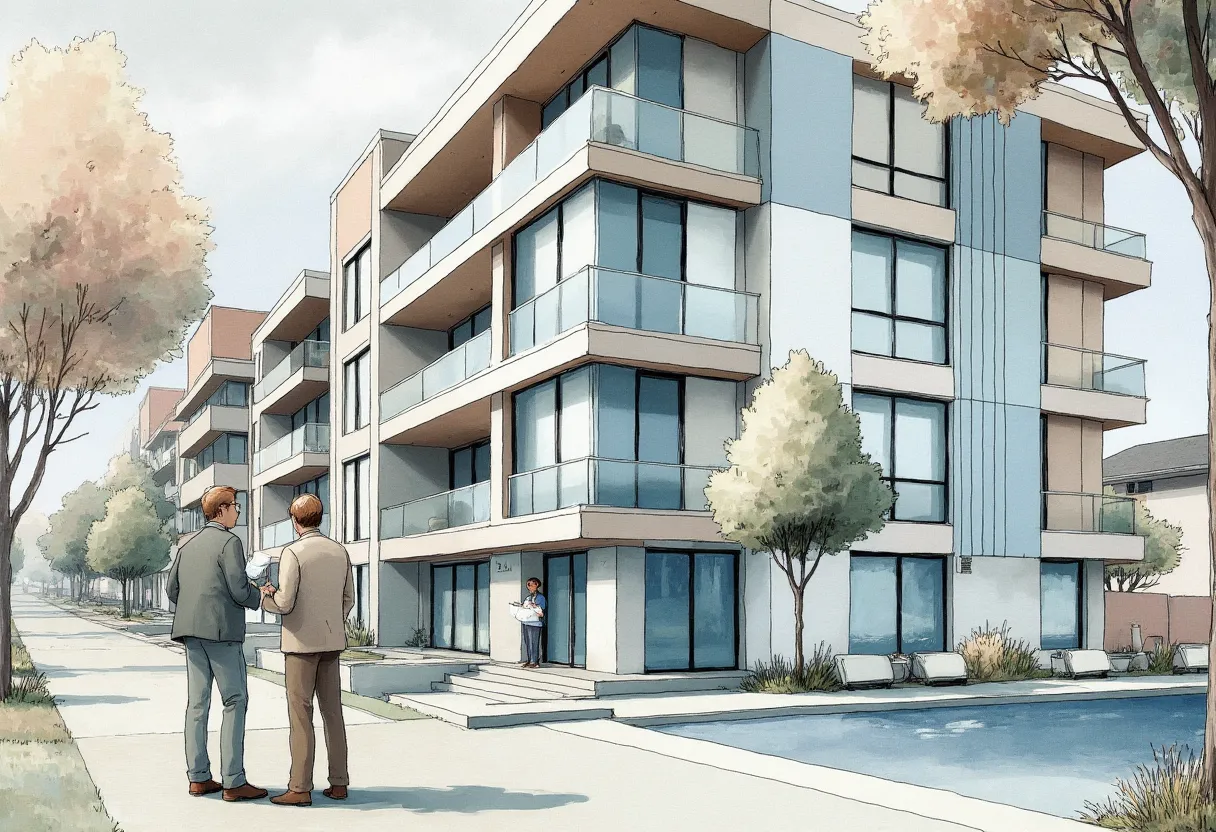
As real estate prices in established Midwest markets climb beyond the reach of many adaptive reuse projects, developers are reconsidering where to invest. According to one industry executive, secondary markets are positioned to benefit from an apparent economic reality: the cost of acquiring and converting buildings in legacy cities remains dramatically lower than in their more established regional competitors.
Christopher Hardesty, Executive Director of the Downtown Akron Development Corporation, says the price gap between secondary and tier-one markets has widened to the point that it is reshaping where projects can make financial sense. “When you look at the cost of real estate in Cleveland or Columbus or wherever else that’s a more developed market, and you look at the cost of the real estate here, we’re pretty affordable still,” Hardesty says.
The difference is not minor – in some cases, it is a multiple. “When you look at rents in Cleveland versus us, we’re usually less than half per square foot,” Hardesty says. “And honestly, we’re probably, from a downtown standpoint, we’re probably a third of the cost of Cleveland.”
The Arbitrage Opportunity
This cost differential creates an arbitrage opportunity that could draw developers away from saturated tier-one markets, as Hardesty describes. As prices in major cities become unreachable for many projects, he expects more attention to shift to places like Akron. “Once those prices are a bit unreachable in those other markets, I expect that we’ll have more traction and attention from outside developers coming into the Akron market to get some affordable buildings,” he says.
However, Hardesty notes this influx has not yet arrived in force. “Not yet – most of our work is local,” he says when asked about outside developer interest. “Most of our developers are local, like regional, at least to Northeast Ohio. We get some people from Columbus that poke around, but we’ve not gotten a lot of attention, like maybe Columbus, Cleveland, and Cincinnati might get from neighboring states or elsewhere in the country.”
The Market Validation Requirement
Lower land costs alone are not enough to drive new investment in secondary markets. Hardesty emphasizes that developers must also evaluate local demand and demographic trends, which differ from those in larger cities.
“In 2018, our community did a study – the downtown vision and redevelopment plan – that identified that this community needed to grow from about 2,800 residents and had the demand to grow to 5,000, and had the demand to add 1,200 units of residential,” Hardesty explains.
In secondary markets, this kind of disciplined market validation is critical. “We do market studies, we understand what the real capacity of that is,” he says. “We do really well here with one bedrooms and studios. We do less well with two bedrooms.”
The Demographic Mix Advantage
Hardesty notes that secondary market downtowns can attract a broader range of residents than tier-one cities, which may support more stable demand even if the overall population base is smaller.
“We have a wide demographic,” Hardesty says. “We have older empty nesters who want to come into the downtown to live in proximity to things to do. And we have young professionals who come in and live as well.”
However, rent levels in secondary markets affect who can afford to live downtown. “There is a bit of a gap – you would love some younger people to come in, but with rents being where they are, a lot of people who are just starting their careers don’t have the income to rent an apartment downtown,” Hardesty explains.
Most downtown apartments in Akron rent between $1,000 and $2,000, depending on unit type, with some studios available below $1,000. “In today’s market, it’s a pretty affordable market to live in,” he says.
Current Development Pipeline
Akron’s current development pipeline shows the market is moving toward the capacity identified in demand studies. “Between the six different projects, we have about 700 to 800 units in progress,” Hardesty says. “If you can guess that a completion date from financial closing to lease is 24 to 36 months, we would be pretty close to that 1,200 unit mark by 2030.”
Hardesty believes that if these projects succeed, they could stimulate further demand rather than simply filling existing needs. “Once we get all those online and they’re successful and they fill, it’s going to be attractive to other people and developers to want to come live in downtown or around downtown,” he says. “There’s going to be some more demand that generates from that activity probably, and we just need to keep up with our supply.”
The Strategic Positioning
For developers considering secondary markets, Hardesty points to low acquisition costs, available tax credit programs, regional bank financing, and steady residential demand as factors that strengthen the investment case.
“We have some affordable buildings. We have some affordable space too,” he says. “We have great parking. It’s affordable. We have a lot of space. We’d love for people to come invest, and we have mechanisms in place to help people get their projects done.”
Whether secondary markets like Akron attract more outside developers in the near future will largely depend on how quickly prices continue to rise in tier-one markets and whether early projects in places like Akron prove that the arbitrage opportunity can deliver real returns.
For now, the gap between primary and secondary markets remains wide – and as Hardesty sees it, the fundamentals are in place for secondary cities to become more attractive as development costs in traditional hubs continue to climb.